Published: 15 October 2026
Category: Religion News / Festival Updates
Focus Keyword: Navratri Day 5 Maa Skandamata 2026
Navratri Day 5 Maa Skandamata 2026: Latest News and Important Details
Navratri Day 5 Maa Skandamata 2026 is being observed on Thursday, 15 October 2026, during Sharadiya Navratri. On this day, devotees worship Maa Skandamata, the fifth form of Goddess Durga, and offer prayers for peace, wisdom, family well-being and spiritual strength.
Maa Skandamata is traditionally regarded as the mother of Lord Skanda, also known as Lord Kartikeya. Her form represents maternal love, compassion, protection and courage. Devotees across India mark the fifth day of Navratri with prayers, devotional songs, traditional offerings and, in many households, fasting.
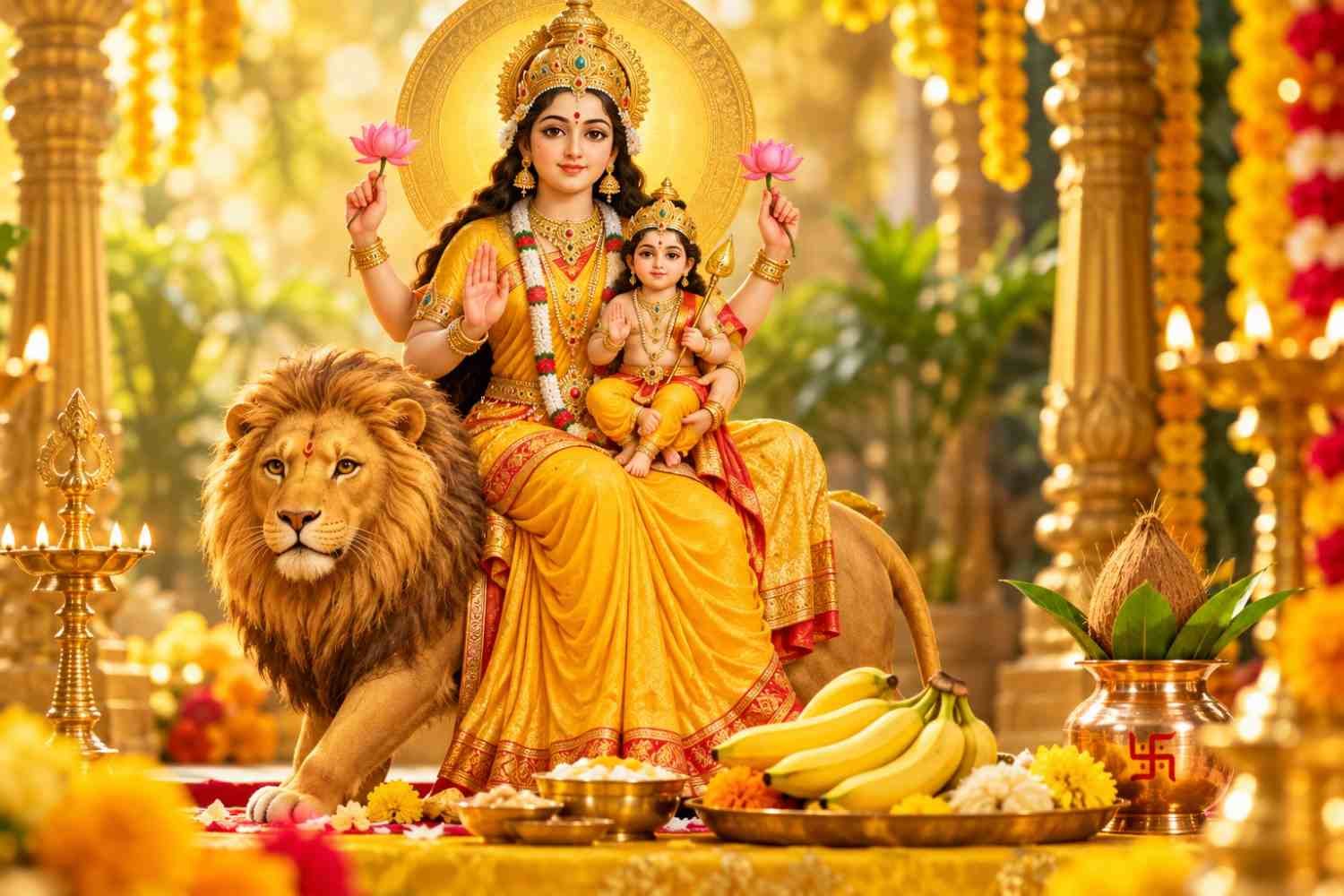
Yellow is the commonly associated colour for Navratri Day 5 in 2026. Bananas and other traditional sweets are popular offerings during the puja.
This article explains the date, religious significance, puja procedure, mantra, bhog, fasting customs and frequently asked questions about Maa Skandamata Puja 2026.
Navratri Day 5 Maa Skandamata 2026: Date and Day
The fifth day of Sharadiya Navratri falls on Thursday, 15 October 2026.
Important details are listed below:
- Festival: Sharadiya Navratri 2026
- Day: Day 5, also known as Panchami
- Date: Thursday, 15 October 2026
- Goddess worshipped: Maa Skandamata
- Associated colour: Yellow
- Traditional offering: Bananas, sweets and other vegetarian offerings
- Main observance: Maa Skandamata Puja and prayers
Panchami Tithi is reported to begin at 1:13 AM on 15 October and end at 3:25 AM on 16 October 2026, according to the cited panchang-based reports. Exact observance timings may differ according to location and calendar calculations.
Devotees should consult a reliable local panchang for the most appropriate puja timing in their city.
Navratri Day 5 Maa Skandamata 2026: Who Is Maa Skandamata?
Maa Skandamata is the fifth manifestation of Goddess Durga worshipped during the nine days of Navratri.
Her name is formed from two words: “Skanda,” another name for Lord Kartikeya, and “Mata,” meaning mother. She is therefore revered as the mother of Skanda or Kartikeya.
In traditional images, the goddess is often shown holding her young son in her lap. She is commonly depicted with four arms and lotus flowers, symbolising purity, grace and spiritual awareness. Her divine form is associated with a lion and, in many depictions, a lotus seat.
The image of a mother holding her child expresses tenderness alongside divine strength. Her worship reminds devotees that compassion and courage can exist together.
Navratri Day 5 Maa Skandamata 2026: Religious Significance
The fifth day of Navratri is dedicated to devotion, maternal affection and the protective aspect of the Divine Mother.
Maa Skandamata is worshipped by devotees seeking spiritual growth, clarity of thought, strength and harmony in family life. In Hindu devotional tradition, prayers to the goddess are also associated with the welfare of children and the well-being of loved ones.
Her lotus symbolism is commonly interpreted as a reminder to maintain purity of intention and inner calm while dealing with everyday challenges.
Religious beliefs and the benefits associated with worship vary among traditions and families. Devotees observe the day according to their faith, regional customs and personal devotional practices.
Navratri Day 5 Maa Skandamata 2026: Puja Vidhi
Maa Skandamata Puja can be performed at home using simple, traditional worship practices. The following is a general guide; families may follow different rituals according to their customs.
Step 1: Clean the Puja Area
Clean the place of worship and arrange the picture or idol of Maa Skandamata. Keep the puja materials ready before beginning.
Step 2: Take a Bath and Wear Clean Clothes
Many devotees begin their daily worship after bathing and wearing clean clothes. Yellow clothing is a popular choice on this day, although it is not compulsory.
Step 3: Prepare the Offerings
Arrange fresh flowers, incense, a lamp, water, fruits and suitable vegetarian offerings. Bananas are commonly offered to Maa Skandamata.
Step 4: Offer Prayers to the Goddess
Light a diya where it can be placed safely, offer flowers and pray with devotion. Follow the customs practised by your family or community.
Step 5: Chant the Maa Skandamata Mantra
Recite the traditional mantra dedicated to the goddess. Some devotees repeat it 108 times using a prayer mala, while others chant it according to their personal practice.
Step 6: Offer Bhog
Present bananas, sweets or another suitable vegetarian preparation. The offering should be prepared and presented according to the household’s religious customs.
Step 7: Perform Aarti
Conclude the worship with aarti, devotional singing or silent prayer. Prasad may then be shared with family members.
There is no need to make the ritual unnecessarily complicated. Devotion, cleanliness and respect for one’s tradition are central to this form of worship.
Navratri Day 5 Maa Skandamata 2026: Mantra and Meaning
A commonly recited mantra for Maa Skandamata is:
ॐ देवी स्कन्दमातायै नमः॥
Transliteration: Om Devi Skandamatayai Namah.
Meaning: I bow to Goddess Skandamata, the mother of Lord Skanda.
Devotees may recite this mantra during morning worship, meditation or evening prayers. Repetition is a devotional practice rather than a requirement that every worshipper must follow in exactly the same way.
The mantra expresses reverence for the goddess and her maternal, protective aspect.
Navratri Day 5 Maa Skandamata 2026: Which Colour Should You Wear?
Yellow is the commonly associated colour for the fifth day of Navratri in 2026.
Yellow is traditionally linked with optimism, brightness, knowledge and auspiciousness. Devotees who follow the day-wise Navratri colour custom may wear yellow clothes or decorate their puja space with yellow flowers.
The colour tradition is a popular devotional custom rather than a compulsory religious rule. Practices may differ by region, family tradition and the calendar followed.
People who do not wear yellow can still participate in the day’s observances through prayer, meditation, charitable acts or other practices meaningful to them.
Navratri Day 5 Maa Skandamata 2026: What Bhog Is Offered?
Bananas are a commonly offered bhog to Maa Skandamata. Devotees may also offer traditional sweets, kheer or other vegetarian preparations, depending on family customs.
Common offerings include:
- Bananas and other fresh fruits
- Kheer or milk-based sweets
- Homemade vegetarian sweets
- Water and fresh flowers as part of the puja arrangement
Offerings vary between regions and households. There is no need to prepare every item listed above; devotees can choose an appropriate offering according to their tradition and circumstances.
Food should be prepared hygienically and offered respectfully.
Navratri Day 5 Maa Skandamata 2026: Fasting Rules and Food
Some devotees observe a fast on the fifth day of Navratri, while others perform the puja without fasting.
The type of fast depends on personal choice, family custom and regional tradition. Common foods consumed by people following Navratri fasting practices include:
- Fresh fruits
- Milk and curd
- Makhana
- Sabudana preparations
- Kuttu or singhara flour dishes
- Samak rice
- Potatoes and permitted vegetables
- Nuts and other permitted foods
The use of salt and other ingredients varies according to the fasting tradition followed. Devotees should check the rules customary in their household.
Fasting is not suitable for everyone. People with medical conditions, those taking medication, pregnant individuals and others with specific nutritional needs should prioritise their health and follow appropriate professional advice.
Navratri Day 5 Maa Skandamata 2026: The Story Behind the Goddess
In Hindu tradition, Maa Skandamata is associated with Lord Kartikeya, who is also known as Skanda.
Traditional accounts describe the birth and role of Kartikeya in the battle against the demon Tarakasura. In these narratives, Kartikeya becomes a divine warrior who helps restore balance against destructive forces.
The goddess’s identity as Skandamata highlights the importance of motherhood and the relationship between divine compassion and strength. Her image holding her son is an enduring symbol of protection and nurturing care.
Different religious texts and regional traditions tell these stories in varying ways. Devotees may follow the version familiar to their community or family.
Navratri Day 5 Maa Skandamata 2026: How Devotees Observe the Day
Observances can vary across India, but common practices include:
- Morning prayers at home or in temples
- Offering flowers, fruit and sweets to the goddess
- Reciting devotional mantras
- Listening to religious stories and hymns
- Observing a fast according to personal custom
- Participating in community worship
- Sharing prasad with family and neighbours
In some places, special temple programmes and devotional events are organised during Navratri. Visitors should check local temple announcements for opening hours, special arrangements and crowd-related guidance.
The festival also provides an opportunity for families to come together in prayer and to reflect on compassion, responsibility and spiritual discipline.
Navratri Day 5 Maa Skandamata 2026: Frequently Asked Questions
1. When is Navratri Day 5 in 2026?
Navratri Day 5 falls on Thursday, 15 October 2026.
2. Which goddess is worshipped on the fifth day of Navratri?
Maa Skandamata, the fifth form of Goddess Durga and the mother of Lord Skanda or Kartikeya, is worshipped on this day.
3. What is the colour for Navratri Day 5 in 2026?
Yellow is the commonly associated colour for Day 5 in 2026.
4. What is the main mantra of Maa Skandamata?
A commonly recited mantra is “ॐ देवी स्कन्दमातायै नमः॥” (Om Devi Skandamatayai Namah).
5. Which bhog is offered to Maa Skandamata?
Bananas are a popular traditional offering. Fruits, sweets and other vegetarian preparations may also be offered according to family custom.
6. Can devotees observe a fast on Navratri Day 5?
Yes. Many devotees fast according to their personal and family traditions. Fasting is optional and should be adapted to individual health needs.
7. What is the significance of Maa Skandamata?
She symbolises maternal love, compassion, protection and spiritual strength. Devotees pray to her for peace, wisdom and family well-being.
8. What time should Maa Skandamata Puja be performed?
Puja timings depend on the local panchang and location. Devotees should check a reliable panchang for their city rather than using a single time for all of India.
9. Is yellow clothing compulsory on Navratri Day 5?
No. Yellow is a popular colour tradition, but wearing it is not compulsory for worship.
10. When does Sharadiya Navratri 2026 end?
Sharadiya Navratri begins on 11 October 2026 and concludes with Vijayadashami on 20 October 2026, according to the commonly published festival calendar.
Conclusion: Navratri Day 5 Maa Skandamata 2026
Navratri Day 5 Maa Skandamata 2026 is being observed on Thursday, 15 October, with prayers dedicated to the mother of Lord Skanda. The day is associated with yellow, traditional fruit offerings, devotional mantras and worship that celebrates maternal compassion and divine strength.
Devotees can mark the occasion through a simple home puja, temple visits, meditation or other practices that reflect their faith. The most important details for the day are the correct date, the goddess being worshipped and the customs followed by individual families.
May the occasion inspire peace, kindness, wisdom and harmony among all.
Editorial note: This article is an original devotional explainer. Festival dates and religious customs should be checked against a reliable local panchang and the traditions followed by the community. Auspicious timings may differ by location.