Last Updated: 11 October 2026
Location: New Delhi, India
Topic: Delhi protests, political developments, voter-list controversy and Election Commission
Delhi Protests and Political Developments 2026: Latest News
Delhi is at the centre of a major political controversy following demonstrations over electoral roll revisions and demands for the resignation of Chief Election Commissioner Gyanesh Kumar.
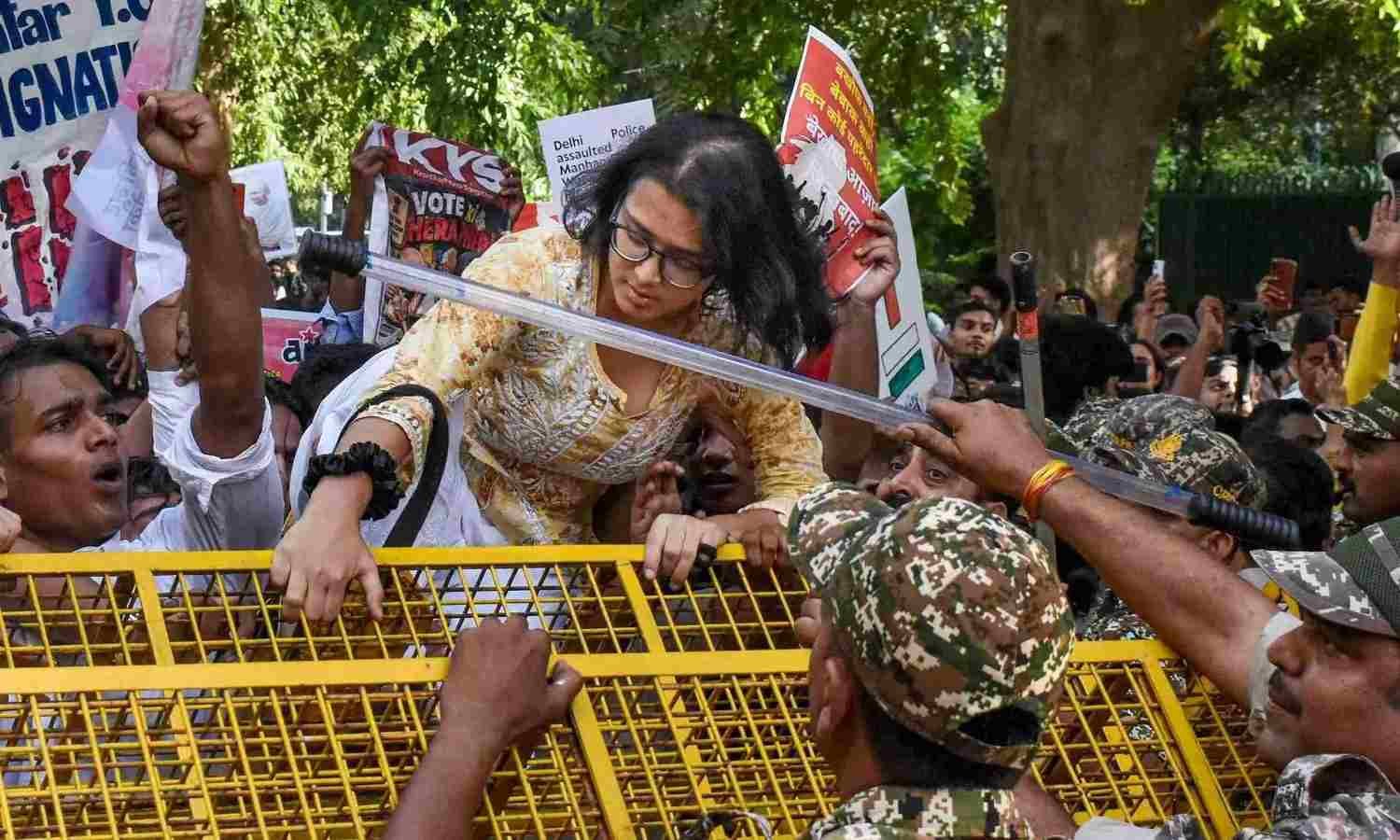
The protests intensified on 10 October 2026, when members and supporters of the youth-led Cockroach Janta Party (CJP), along with other political activists, attempted to gather in the national capital. The proposed demonstration was intended to raise concerns about the Special Intensive Revision (SIR) of electoral rolls and alleged irregularities in the voter-registration process.
Police imposed security restrictions in several parts of Delhi, and numerous protesters and political figures were detained. Opposition parties criticised the authorities’ response, while the government and ruling-party representatives defended the need to maintain public order.
The controversy has also raised questions about the balance between public safety, freedom of peaceful assembly and the right of citizens to participate in democratic processes.
According to reporting published on 11 October by Reuters and The Indian Express, the situation remained politically sensitive, with further demonstrations being discussed and legal proceedings expected to examine aspects of the authorities’ response.
Sources:
- Reuters: Delhi protests and political developments
- The Indian Express: Latest Delhi protest updates
Delhi Protests and Political Developments 2026: What Happened on 10 October?
The main demonstration was planned around Jantar Mantar, a prominent protest location in New Delhi.
The organisers wanted to draw attention to changes in electoral rolls and demand accountability from the Election Commission. However, authorities deployed security personnel and restricted access to several areas before the demonstration could proceed as planned.
Reports described preventive detentions, barricades and disruptions affecting movement through parts of the capital. Smaller demonstrations also took place at other locations after protesters encountered restrictions near the main gathering point.
According to Reuters, more than 2,000 people had been detained by the time of its reporting on 10 October. Other media reports gave different figures, reflecting differences in reporting periods and the groups included in their counts.
Consequently, the total number of people detained should not be treated as definitively established without a consolidated official statement.
The developments transformed what was intended as a protest over electoral administration into a wider political dispute involving opposition parties, security agencies and questions about democratic freedoms.
Source: Reuters, 10 October 2026.
Delhi Protests and Political Developments 2026: Why Are People Protesting?
The central issue behind the demonstrations is the Special Intensive Revision of electoral rolls.
An electoral roll is the official list of eligible voters used during elections. Keeping these records accurate is essential to ensuring that eligible citizens can exercise their voting rights.
The Election Commission’s revision process is intended to identify eligible voters, update records and address entries that should no longer remain on the rolls.
However, opposition parties and protest organisers have raised concerns about whether the process could result in eligible voters being excluded.
Their concerns include the following:
- Whether eligible voters have been incorrectly removed from electoral rolls.
- Whether the revision process provides sufficient transparency.
- Whether citizens have adequate opportunities to correct errors.
- Whether voter-registration procedures are being implemented fairly.
- Whether electoral authorities have adequately addressed objections raised by political parties and civil society groups.
These are contested political claims. Allegations that voter-list changes were deliberately designed to benefit a particular political party should not be treated as established facts without supporting evidence.
The Election Commission’s published instructions describe procedures for identifying potentially excluded voters and facilitating enrolment. Its stated objective is to ensure that eligible citizens are included while ineligible entries are excluded.
Official background: Election Commission of India
Delhi Protests and Political Developments 2026: What Is the Special Intensive Revision of Electoral Rolls?
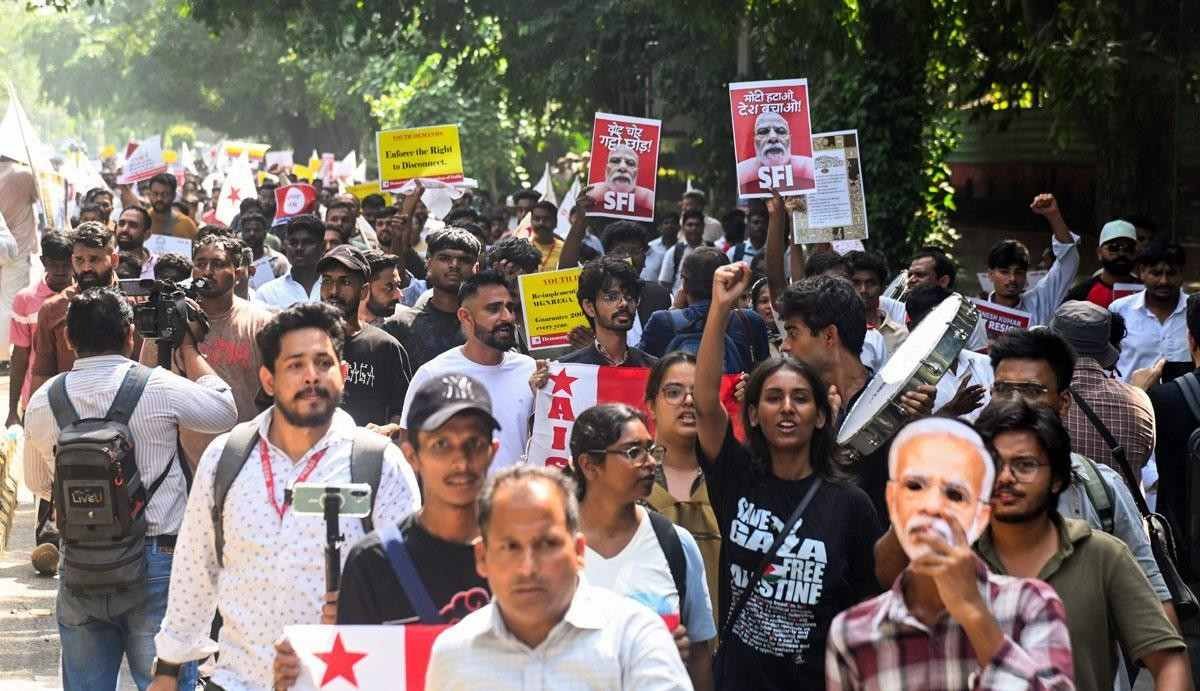
The Special Intensive Revision, commonly known as SIR, is an electoral-roll revision exercise undertaken by the Election Commission.
Its purpose is to improve the accuracy of voter records by reviewing existing entries and identifying people who may need to be added, corrected or removed from electoral rolls.
The process can involve field verification, publication of draft electoral rolls, consideration of claims and objections, and publication of final rolls.
The controversy has centred on whether the revision process has adequately protected the rights of eligible voters.
On 1 October 2026, the Election Commission issued instructions concerning a special drive to facilitate the enrolment of eligible people who may have been left out of the revised rolls.
The instructions included identifying people whose names appeared in pre-revision records but were missing from the current electoral roll, conducting household visits and facilitating enrolment through Form 6 wherever appropriate.
This is an important part of the wider debate because it establishes that procedures exist for eligible individuals to seek enrolment. It does not, by itself, resolve every allegation about the accuracy or implementation of the revision process.
Eligible citizens who believe their names are missing should consult the Election Commission’s official services and the relevant electoral registration authorities.
Official source: Election Commission of India
Delhi Protests and Political Developments 2026: Why Is Gyanesh Kumar Facing Opposition Demands?
Chief Election Commissioner Gyanesh Kumar has become a central figure in the current political controversy.
Protest organisers and opposition leaders have called for his resignation, arguing that the electoral-roll revision process requires greater accountability and transparency.
Their demands are connected to concerns about possible voter exclusion and the Election Commission’s handling of objections to the process.
The controversy has also intensified political disagreements over the independence of constitutional institutions and public confidence in election administration.
However, demands for a resignation do not establish that an officeholder has committed wrongdoing. Allegations concerning electoral manipulation must be assessed through evidence, official records and appropriate legal procedures.
The Election Commission’s responsibilities include maintaining electoral rolls and administering elections under the applicable constitutional and statutory framework.
The political debate is therefore not limited to an individual official. It also concerns the standards of transparency, accountability and public confidence expected from India’s electoral system.
Delhi Protests and Political Developments 2026: Role of the Cockroach Janta Party
The Cockroach Janta Party has emerged as a prominent name in the latest round of demonstrations.
The movement gained public attention through youth-led political activism and online discussion. Its campaign has included issues involving education, employment, political accountability and electoral integrity.
Abhijeet Dipke, a leading figure associated with the movement, was among those reported detained in connection with the planned Delhi demonstration.
The movement’s participation reflects the growing role that digital communication and youth mobilisation can play in political campaigns.
Social media can help organisers communicate quickly, distribute information and attract participants. However, claims circulated online about arrests, injuries, voter exclusions or police conduct should be independently verified before publication.
The movement’s political significance will depend on its ability to sustain public support, articulate its demands and engage with the legal and institutional processes surrounding the controversy.
Source: Reuters report on the movement
Delhi Protests and Political Developments 2026: Opposition Parties React
Opposition parties have criticised the handling of the demonstrations and raised questions about the restrictions imposed on protesters.
Their objections have focused on several issues:
- The scale of preventive detentions.
- Restrictions on public gatherings.
- Disruptions to public transport.
- The treatment of opposition leaders and activists.
- The transparency of the electoral-roll revision process.
Some opposition leaders have argued that the police response unnecessarily restricted democratic participation.
The INDIA opposition bloc has also announced plans for further political action against the Chief Election Commissioner, with reporting on 11 October indicating that a demonstration was planned for 12 October.
The precise programme, participation and outcome of any future demonstration should be confirmed through fresh reporting.
These developments show that the controversy is extending beyond a single gathering and becoming part of a wider national debate about electoral administration and political accountability.
Delhi Protests and Political Developments 2026: Government and Police Response
Authorities have defended security measures as necessary to manage potential law-and-order problems surrounding the demonstrations.
Police restrictions and preventive detentions were reported in several areas of Delhi. Authorities had also limited access to parts of central Delhi and implemented transport-related measures ahead of the planned gathering.
Supporters of stricter security arrangements argue that authorities must prevent violence, protect public infrastructure and maintain access to essential services.
Critics, however, have questioned whether the restrictions were proportionate to the risks posed by the planned demonstrations.
A complete assessment requires consideration of the specific orders issued, the circumstances at individual protest sites, the legal basis for detentions and the evidence concerning any violence.
Reports of clashes and stone-pelting should also be distinguished from allegations concerning the conduct of individual protesters or police officers. Responsibility for specific incidents should not be assigned without reliable evidence.
As of 11 October 2026, the wider controversy over the handling of the demonstrations remained unresolved.
Delhi Protests and Political Developments 2026: Supreme Court Proceedings
The restrictions imposed ahead of the demonstrations have also prompted legal questions.
Reporting by The Indian Express indicated that the Supreme Court had expressed concern on 9 October about extensive security measures, including the closure of metro stations and the cancellation of some train services.
The Court reportedly emphasised proportionality and the need to avoid unnecessarily disrupting public life while addressing security concerns.
A further hearing was scheduled for 11 October concerning a plea seeking contempt proceedings against authorities over alleged non-compliance with earlier directions relating to transport services.
The allegations made in a petition are not the same as a judicial finding. The outcome of the hearing should therefore be reported only after an updated court report or official order becomes available.
The proceedings are significant because they concern the relationship between security measures, compliance with judicial directions and the public’s ability to move around the capital.
Readers should distinguish between the filing of a petition, observations made during a hearing and a final judicial order.
Source: The Indian Express — Supreme Court proceedings concerning Delhi protest restrictions
Delhi Protests and Political Developments 2026: Impact on Public Transport and Traffic
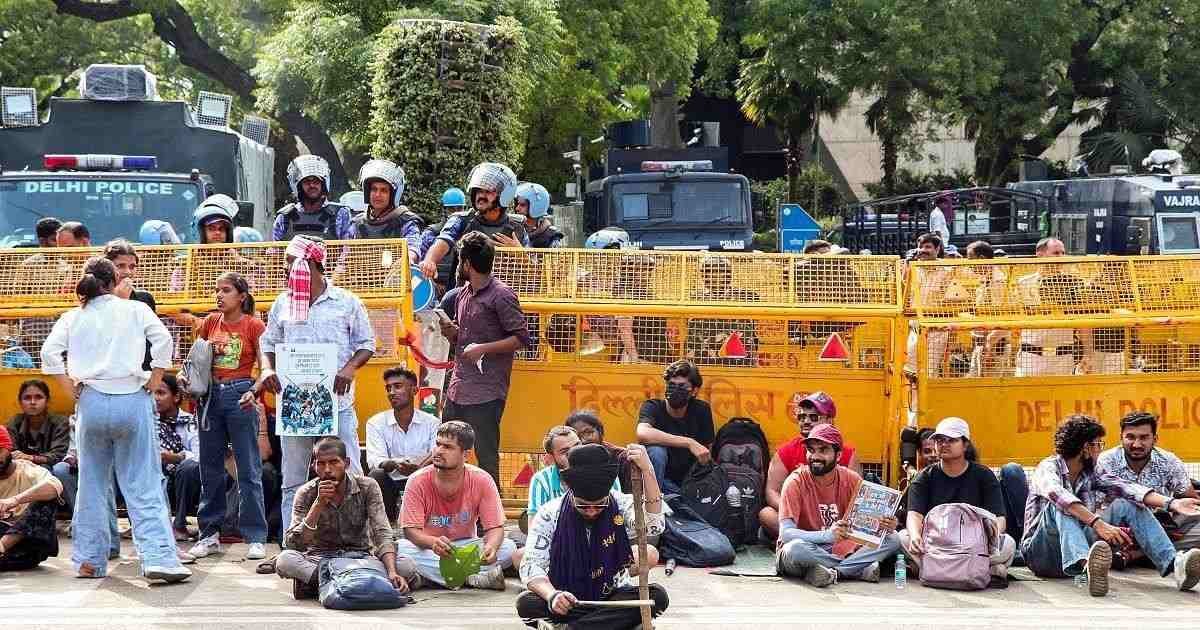
The protests and associated security measures affected movement through parts of New Delhi.
Transport-related restrictions and reports of metro-station closures created uncertainty for commuters and people travelling through central Delhi.
Authorities also issued traffic advisories ahead of the planned demonstration.
The precise effect on individual roads, metro stations and train services can change quickly. Readers should not rely on an earlier news report for current travel conditions.
People travelling through the capital should check official updates before setting out, particularly if their route passes through Jantar Mantar, Connaught Place, Sansad Marg or other areas associated with demonstrations.
For verified traffic information, consult the Delhi Traffic Police website.
For metro-service information, consult the Delhi Metro Rail Corporation.
Delhi Protests and Political Developments 2026: Human Rights and Freedom of Assembly
The handling of the demonstrations has raised broader questions about freedom of expression and peaceful assembly.
These freedoms are important components of democratic participation. Citizens use demonstrations to express disagreement, demand accountability and draw attention to public concerns.
At the same time, public gatherings may be subject to lawful restrictions designed to protect public safety and the rights of other citizens.
The key question is whether any restriction is supported by law, necessary in the circumstances and proportionate to the legitimate objective being pursued.
Amnesty International criticised the authorities’ response to the electoral-roll protests, including reported detentions and restrictions on communications.
The United Nations human rights office also raised concerns about the handling of the protests, according to news reports. India rejected the criticism, describing the remarks as unwarranted interference in domestic affairs.
These competing positions illustrate the international attention the controversy has attracted.
An accurate assessment should include the applicable legal framework, official explanations, evidence from protest sites and any subsequent judicial findings.
Source: Amnesty International’s statement on the protests
Delhi Protests and Political Developments 2026: What Could Happen Next?
Several developments could shape the next phase of the controversy.
1. Further demonstrations
The Cockroach Janta Party and opposition groups have indicated that additional protests may take place. The size, location and outcome of any gathering will depend on organisers’ decisions and the applicable permissions and restrictions.
2. Further legal proceedings
The Supreme Court proceedings concerning the authorities’ response may clarify the status of the legal challenges and any directions issued to officials.
The significance of the case will depend on the Court’s actual orders rather than claims made by the parties.
3. Continued debate over voter registration
The electoral-roll revision process is likely to remain a central political issue while questions about potentially excluded voters and the procedures for correcting records continue to be discussed.
4. Responses from electoral authorities
Further statements, instructions or clarifications from the Election Commission could influence public understanding of the revision process.
5. Political mobilisation
Opposition parties and youth groups may continue to use public meetings, demonstrations and online campaigns to press their demands.
These are possible areas of further development, not confirmed outcomes. Readers should follow verified updates rather than assume that any political demand will necessarily be accepted.
Delhi Protests and Political Developments 2026: What Citizens Should Know
Citizens concerned about the voter-list controversy should focus on practical steps and verified information.
Check your voter registration: Use official Election Commission services to check your enrolment status.
Correct missing or inaccurate details: Contact the relevant electoral registration authority and follow the applicable procedure.
Verify claims before sharing them: Do not rely solely on viral posts, forwarded messages or unverified videos.
Check travel advisories: Confirm the latest road and metro information before travelling through affected areas of Delhi.
Follow court developments carefully: Distinguish between allegations, arguments made by lawyers, judicial observations and final orders.
These steps can help citizens understand the controversy without relying on rumours or politically motivated misinformation.
Delhi Protests and Political Developments 2026: Frequently Asked Questions
What are the Delhi protests about in October 2026?
The demonstrations are primarily linked to concerns about the Special Intensive Revision of electoral rolls and demands for the resignation of Chief Election Commissioner Gyanesh Kumar. Protest organisers and opposition parties have questioned the transparency and fairness of the revision process.
Who organised the Delhi protests?
The Cockroach Janta Party and associated youth activists were among the principal organisers of the planned demonstration at Jantar Mantar. Other activists and opposition groups also participated in protests or related political activity.
Why is Gyanesh Kumar facing demands to resign?
Protesters and opposition leaders have demanded his resignation over allegations concerning electoral-roll revisions. These allegations remain contested and should not be presented as proven electoral manipulation without supporting evidence.
Were protesters detained in Delhi?
Yes. News organisations reported numerous detentions during the demonstrations on 10 October 2026. Published totals differed between reports, so the final number should be confirmed through an updated, reliable account.
Did the Supreme Court intervene in the Delhi protest controversy?
The Supreme Court reportedly expressed concern about the proportionality of security measures affecting public transport and was scheduled to hear a related contempt petition on 11 October 2026. The latest outcome should be confirmed from a subsequent report or the Court’s official record.
Will there be another Delhi protest on 12 October 2026?
Reports published on 11 October indicated that opposition groups had announced further protest action for 12 October. Readers should check fresh reports for confirmation of the final programme and any restrictions.
How can citizens check whether their names appear on the voter list?
Citizens can use the Election Commission of India’s official website and voter services to check their registration status and find information about enrolment or correction procedures.
Official website: https://www.eci.gov.in/
Delhi Protests and Political Developments 2026: Conclusion
The Delhi protests of October 2026 have brought electoral transparency, political accountability, public order and democratic freedoms into sharp focus.
The immediate controversy concerns the revision of electoral rolls and demands for the resignation of Chief Election Commissioner Gyanesh Kumar. However, the broader debate concerns how electoral institutions can maintain accurate voter records while protecting the rights of eligible citizens.
Police restrictions and detentions have added another dimension to the dispute, prompting criticism from opposition parties and human rights organisations. Judicial proceedings may help clarify some questions concerning the authorities’ actions and the legal limits of security restrictions.
As the situation develops, reliable reporting will require careful verification of official statements, court orders, voter-registration information and claims made by political actors.
For the latest Delhi Protests and Political Developments 2026, continue checking verified updates from official authorities and credible news sources.